


Every time you turn on the tap, it’s easy to assume the water coming out is clean and safe. But the water used in your home—for drinking, cooking, brushing your teeth, and even taking a hot shower—can contain regulated contaminants formed during municipal water treatment.
This isn’t speculation. Independent laboratory testing and publicly available water quality data show that Shreveport and Bossier City tap water contains several disinfection byproducts and trace contaminants commonly found in treated municipal systems.
🧪 According to data from independent lab testing and the Environmental Working Group (EWG), our local water contains:
These compounds form when disinfectants like chlorine and chloramine react with naturally occurring organic matter in source water. While municipal treatment is designed to control bacteria, it can also result in byproducts that remain present during everyday water use.
Repeated exposure over time—through drinking, cooking, bathing, and showering—is why many families choose to better understand what’s in their water and explore responsible ways to improve water quality at the point of use.
We’ve compiled the most relevant contaminants identified in Shreveport and Bossier City tap water. Each compound is presented alongside:
Scroll down or download the full PDF to see exactly what’s been identified in local water supplies.
We didn’t just build a filtration system—we engineered a solution. The Waymaker™ reverse osmosis system is custom-designed for our region’s water profile and independently lab-tested to demonstrate high-level reduction of key contaminants, including:
Every drop of water your family drinks or cooks with should be pure, safe, and revitalizing. With The Waymaker™, it finally can be—delivering uncompromising water quality you can trust, from the first pour to the last.
You can review independent, EPA-based lab testing documentation here. These reports show how The Waymaker™ performs across multiple system configurations.
Designed, tested, and validated to deliver consistently high-performance drinking and cooking water.
These are not theoretical claims. Performance data comes from independent laboratory testing conducted directly on The Waymaker™ system at multiple stages:
Unlike many systems that test only for chlorine or a small subset of contaminants, The Waymaker™ has been evaluated using broad, EPA-based analytical panels designed to assess real-world drinking water quality.
Independent laboratory testing shows that the vast majority of contaminants detected in comprehensive municipal water panels were reduced to non-detect or near non-detect levels—performance that places The Waymaker™ among the highest-performing residential RO systems evaluated.
Shreveport and Bossier City water contains chloramine, disinfection byproducts such as THMs and HAAs, and trace volatile organic compounds.
The Waymaker™ is specifically engineered to address these conditions using:
High-grade catalytic carbon
KDF redox media
A high-efficiency RO membrane
A premium remineralization stage designed to restore balance and taste
This system isn’t generic—it’s built for the water actually coming into local homes.
Consistently clean, mineral-balanced water designed for everyday drinking and cooking—validated by independent testing and built as a top-tier RO system optimized for Shreveport-Bossier water.
You deserve clear answers and thoughtful options.
 Get clear guidance based on your home and local water conditions.
 Talk directly with the installer who will serve your home.
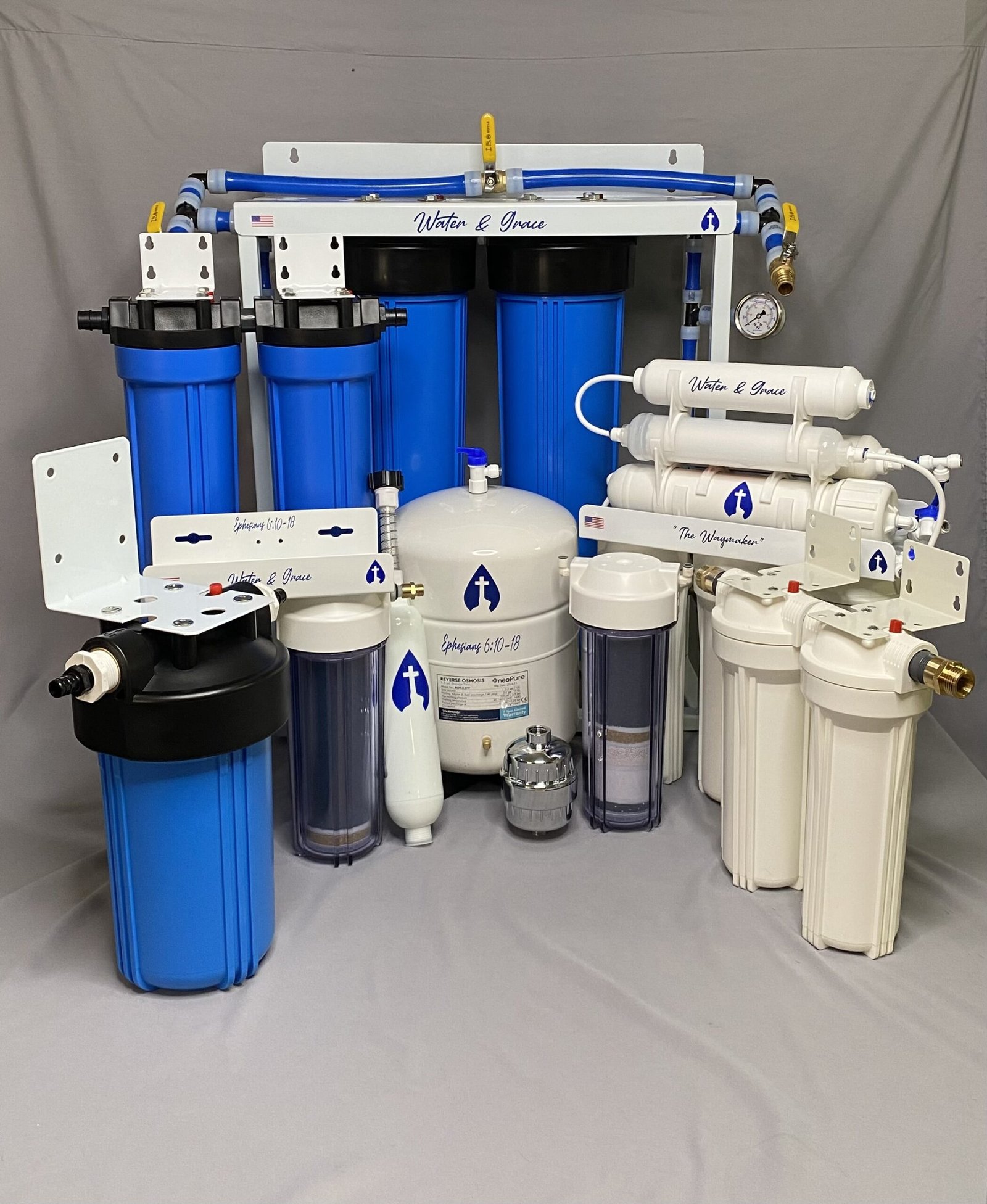
We provide custom configured 10-stage reverse osmosis system installations and ongoing filter maintenance, tailored to Shreveport-Bossier and surrounding communities’ water profiles.